Đề thi cuối kì 2 lớp 9 môn tiếng Anh là cột mốc cực kì quan trong đối với các bạn học sinh lớp 9 để đánh giá lại khả năng học tập ngôn ngữ và chuẩn bị bước vào kỳ thi tuyển sinh lớp 10. Hãy cùng Focus Learning khám phá những kiến thức cần ôn và các đề thi cuối kì 2 lớp 9 môn tiếng Anh tham khảo nhé!
Cấu trúc đề thi cuối kì 2 lớp 9 môn tiếng Anh
Thông thường, một đề thi cuối kì 2 lớp 9 môn tiếng Anh sẽ bao gồm các phần chính: Ngữ âm, Ngữ pháp, 12 thì tiếng Anh, Đọc hiểu và Viết. Dưới đây là những “ngôi sao” thường xuyên xuất hiện trong các câu hỏi ngữ pháp mà bạn cần chú ý:
Reported speech
Câu tường thuật với câu hỏi Yes/No giống như việc bạn kể lại cho một người bạn khác về một câu hỏi mà ai đó đã hỏi mình.
- Cách làm: Chúng ta thường dùng từ nối if hoặc whether.
- Ví dụ: “Do you like candy?” -> He asked me if I liked candy. (Lưu ý là chúng ta phải lùi thì của động từ xuống một bậc nhé!)
Relative pronouns
Đại từ quan hệ là những từ dùng để nối hai câu lại với nhau cho ngắn gọn hơn, bao gồm: who, whom, which, that, whose.
Defining relative clauses
Đây là mệnh đề quan hệ xác định. Nó rất quan trọng vì nếu thiếu nó, người nghe sẽ không biết bạn đang nói về ai hoặc cái gì.
- Ví dụ: The teacher who teaches English is very kind. (Nếu bỏ phần bôi đậm, ta sẽ không biết “giáo viên” nào cả).
Non-defining relative clauses
Mệnh đề quan hệ không xác định chỉ dùng để bổ sung thêm thông tin “phụ”. Chúng ta thường dùng dấu phẩy để ngăn cách nó.
- Ví dụ: Mr. Nam, who is my neighbor, is a doctor. (Dù bỏ phần bôi đậm thì ta vẫn biết người đang được nói đến là ông Nam).
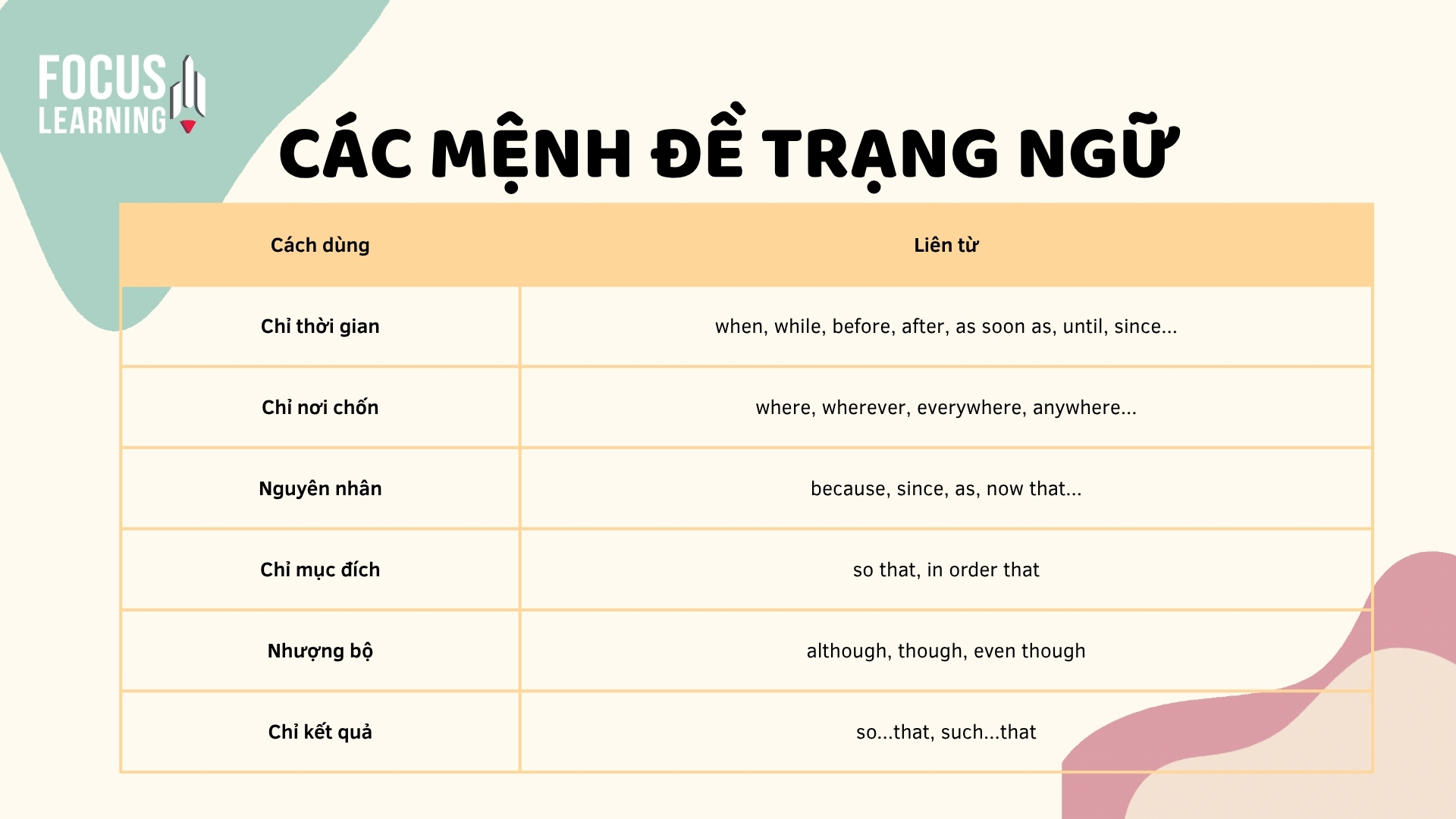
Các mệnh đề chỉ trạng ngữ
Trong đề thi cuối kì 2 lớp 9 môn tiếng Anh, các bạn sẽ gặp các mệnh đề chỉ lý do (because, since), kết quả (so, therefore), hoặc sự đối lập (although, even though).
Đề thi cuối kì 2 lớp 9 môn tiếng Anh tham khảo
A. LISTENING
I. Listen to Mrs Lee talking to her secretary about her business trip. Circle A, B or C. (1 point)
1. Mrs. Lee’s plane goes at
A. 8 am B. 10 am C.11 am D. 9 am
2. She is going to
A. Amsterdam B. Frankfurt C. London D. Liverpool
3. First she will go to
A. a factory B. an office C. a hotel D. a market
4. She will have dinner in
A. a restaurant B. her hotel C. someone’s house D. her school
II. You will hear a conversation between Kate and Jeremy talking about Kate’s birthday party next week.
Listen and choose TRUE or FALSE: (1 point)
1. Kate will be 16 on her next birthday.
2. Her birthday party will be on Wednesday.
3. The party will start at 8:30.
4. The party will take take place at London Hotel.
B. VOCABULARY + GRAMMAR
I. Choose the word which has a different sound in the part underlined. (0.5 pt)
1. A. danger B. anger C. occation D. nation
2. A. unique B. university C. unusual D. uniform.
II. Choose the word whose stress pattern is different from that of the other words. (0.5 pt)
1. A. sodality B. academic C. individual D. distribution
2. A. relation B. decision C. television D. education
III. Choose the correct answer to each of the following question. (1.75 pt)
1. It takes Earth, _____ is the fifth largest planet in the solar system, about 365 days to complete its orbit around the Sun.
A. that B. what C. which D. who
2. My friend suggested that I _________ think carefully of my real ability and interest before making a decision about my future career.
A. could B. should C. would D. must
3. The local government has built a new nature reserve _____ they can preserve endangered animals in the sea.
A. so that B. in order to C. although D. so as to.
4. My new printer has _____ capability, so I don’t need to connect it to my computer with a cable.
A. cordless B. radio C. remote D. wireless
5. Many human activities cause ______ , which is also called habitat destruction.
A. climate change B. habitat loss C. ecological balance D. global warming.
6. Mrs Hoa is a skillful _____ who makes beautiful and unique dresses.
A. hairdresser B. mechanic C. tailor D. assembly worker
7. Nam suggsted_____ in groups to improve our understanding of the subject.
A. study B. studied C. studying D. to study
IV. Read the following reminder and mark the letter A, B, C or D on your answer sheet to indicate the correct option that best fits each of the numbered blanks. (0.75 pt)
REMINDER
“Dear residents, please remember to sort your waste correctly. Recycling bins (1) _______ for paper, glass, and plastics only. Organic waste goes (2) _______ the green bin. Let’s work together to keep our (3) _______ clean and green!”
1. A. is B. was C. are D. were
2. A. at B on C. up D. into
3. A. community B. commune C. communal D. communalize
C. READING
I. Read and decide which option A, B, C or D best fits each space. (1.25 pt)
The Nile River, which spans over 6.600 kilometers, (1) _______water for drinking, irrigation, and agriculture. Many communities along its banks rely on the river for their livelihoods. The Nile also supports a diverse ecosystem, with various (2) _______of fish, birds, and mammals. It is a popular tourist destination, attracting visistors who enjoy boat cruises and (3) _______ its historical sites. The river played a significant role in ancient civilisations, such as the Egyptian civilisation, where it was worshipped as a divine entity. Today, efforts are being made to (4) _______ the Nile’s ecosystem and ensure its sustainable use for future generations. The Nile River is truly a remarkable natural wonder, showcasing the beauty and inmportance of our planet’s ( 5) _______.
1. A. provides B. sells C. produces D. buys
2. A. animals B. trees C. species D. plants
3. A. exchanging B. exporting C. explaining D. exporing
4. A. protect B. create C. change D. provide
5. A. land B. water C. forest D. soil
II. Read the passage carefully and choose the correct answer A, B, C or D for each question. (1.25 pt)
Do you ever think about what schools will be like in the future? Many people think that students will study most regular classes such as maths, science and history online. Students will probably be able to these subjects anywhere using a computer. What will happen if students have problem with a subject? They might connect with a teacher through live videoconferencing. Expert teachers from learning centres will give students help wherever they live.
Students will still take classes in a school, too. Schools will become places for learning social skills. Teachers will guide students in learning how to work together in getting along with each other. They will help students with group projects both in and out of the classroom.
Volunteer work and working at local businesses will teach students important life skills about the world they live in. This will help students become an important part of their communities. Some experts say it will take five years for changes to begin in schools. Some say it will take longer. Most people agree, though, that computers will change education the way TVs and telephones changed life for people all over the world years before.
1. What is the main idea of the passage?
A. All classes will be taught online in the future.
B. Teachers will help students from home in the future.
C. Kids won’t have to go to school in the future.
D. Computers will change education in the future.
2. What will happen if students meet difficulties with a subject?
A. They will telephone the teachers who are staying at the school to seek their help.
B. Schools will organise a live videoconference for teachers to help students with problems.
C. Teachers from learning centres will give them help through live videoconferencing.
D. They will meet their teachers in person for help with problems with the subject.
3. The main role of teachers in the future will be .
A. helping students with group projects
B. organising live videoconferences
C. providing students with knowledge
D. guiding students to learn computers
4. Students will still go to school to .
A. play with their friends C. learn social skills
B. learn all subjects D. use computers
5. Students will learn important life skills through .
A. working in international businesses B. doing volunteer work
C. going to school every day D. taking online classes
D. WRITING
I. Choose the best sentence that can be combined from the two ones given. (0.5 pt)
1. A person teaches at university. He is a professor.
A. A person who teaches university at is a professor.
B. A person who is university teaches a professor.
C. A person who teaches at a university is a professor.
D. A person teaches who at university is a professor.
2.The speech was very boring. Most of us felt sleepy.
A. The speech was very boring that most of us felt sleepy.
B. It was so a boring speech that most of us felt sleepy.
C. The speech was too boring that most of us felt sleepy.
D. The speech was so boring that most of us felt sleepy.
II. Write a paragraph (about 100- 120 words) about what your favourite electronic device can do now and what it will be able to do in the future. Use the following questions. (1.5 pt)
– What is your favourite electronic device?
– What can it do for you now?
– What will it be able to do for you in the future?
Đáp án
| Section | Content | Answer |
|---|---|---|
| A. LISTENING | I. Listen to Mrs Lee talking | 1.B, 2.C, 3.A, 4.A |
| II. You will hear a conversation between Kate and Jeremy talking | 1.False, 2.False, 3.True, 4.True | |
| B. VOCABULARY + GRAMMAR | I. Choose the word which has a different sound | 1.B, 2.C |
| II. Choose the word whose stress pattern is different | 1.A, 2.C | |
| I. Choose the correct answer | 1.C, 2.B, 3.A, 4.D, 5.B, 6.C, 7.C | |
| II. Read the following reminder | 1.C, 2.D, 3.A | |
| C. READING | I. Read and decide | 1.A, 2.C, 3.D, 4.A, 5.B |
| II. Read the passage carefully | 1.D, 2.C, 3.A, 4.C, 5.B | |
| D. WRITING | I. Choose the best sentence | 1.C, 2.D |
Tải ngay đề thi cuối kì 2 lớp 9 môn tiếng Anh
Để chuẩn bị tốt nhất, bạn không nên chỉ học lý thuyết mà cần thực hành thật nhiều với các bộ đề đa dạng.
Tải ngay bộ đề cương ôn tập cho đề thi cuối kì 2 lớp 9 môn tiếng Anh
Tổng hợp 8 mẫu đề thi cuối kì 2 lớp 9 môn tiếng Anh từ các trường THCS có kèm lời giải chi tiết để bạn tự chấm điểm tại nhà.
TẢI NGAY ĐỀ THI CUỐI KÌ 2 LỚP 9 MÔN TIẾNG ANH
Lời kết
Hy vọng bài viết này đã giúp bạn hiểu rõ hơn về cấu trúc đề thi cuối kì 2 lớp 9 môn tiếng Anh. Chỉ cần chăm chỉ ôn tập các cấu trúc câu tường thuật, đại từ quan hệ và nắm chắc từ vựng, chắc chắn bạn sẽ đạt kết quả như ý. Chúc các bạn ôn thi thật tốt và tự tin bước vào kỳ thi sắp tới!
ĐĂNG KÝ NHẬN TƯ VẤN NGAY